Leaf Peeping & Label Lessons Learned in Vermont by Mirabai Holland © 2011

Last weekend I went hiking in Vermont and the Fall color was astonishing.

I went along for about two hours at a brisk pace enjoying the fresh air.

Much of my exercise is teaching fitness classes and creating new routines for exercise DVDs. So, it was refreshing to just free my mind, move my body and drink in all those trees dressed in red, yellow, orange mixed with green. Sometimes its good to mix up your exercise routine. I felt renewed.

When I finished my hike we went into a little country food market.

So cute with all those red and white checkered tabletops filled with fresh fruits, vegetables, homemade jams, honey, maple syrup and cider. I spotted a bottle that said “Fresh Apple Cider” thinking how fresh it would taste, this being apple season and all. I continued my walk and I’d gotten a considerable distance from the store when I decided it was time for swig of cider. As I was about to sip, I glanced at the ingredients label expecting to see APPLES. But instead it read

APPLES, and Potassium sorbate, a preservative.

I wanted to throw that cider against a wall!


I was thirty so I drank a little and whether it was in my mind or not, it seemed to taste not as fresh as I imagined it would. So the lesson here, is just because you are in an adorable country market, don’t take for granted that all the foods will be fresh and adorable too.


So caveat emptor: let the buyer beware!

I also filmed a brief vlog (video blog) post while I was there. Enjoy!

Share this:
Share this page via Email Share this page via Stumble Upon Share this page via Digg this Share this page via Facebook Share this page via Twitter
Share

The Wellness Mandala By Mirabai Holland, MFA ©2011

Autumn, leaves are turning, frost is on the pumpkin and flu season is knocking at our door. I’ve got no excuse. Even my neighborhood drugstore is giving out flu shots these days.
Thinking about avoiding the flu always makes me wax philosophic.
So I started thinking about wellness. What is wellness anyway?
It’s the absence of disease. If you are not sick you are well.
But it’s more than that isn’t it? It’s quality of life and for some it’s the balance of all things. I like this balance concept so I dug out one of my favorite balance tools:
The Mandala: the wheel of life. I wrote down all the types of wellness I could think of and ended up with 6 categories that I stuck on my Mandala. Here they are:
Physical Wellness
· Taking care of your body, eat right, exercise
· Visit your doctor regularly

Mental Wellness
· Keeping an open mind and trying to see other’s point of view
· Allowing your curiosity to take you to new places and learn new things.

Emotional Wellness
· Trying to keep a positive state of mind
· Cultivating self esteem
· Reaching out to others for support

Spiritual Wellness
· Recognizing your beliefs.
· Allowing your core values to direct your actions.

Social Wellness
· Developing positive inter-personal relationships at home and work
· Allowing yourself to give and receive love: to and from everyone that means that much to you including animals
· Participate in social situations; try not to stay on the sidelines.

Environmental Wellness
· Making your home environment peaceful, pleasant, safe and comfortable.
· Choosing an occupation and a workplace that doesn’t drive you nuts.
· Try to have a positive impact on our natural environment.
Recycle more, pollute less.

When the wheel is in balance it spins evenly. When even one of these categories is out of whack, the whole wheel starts to wobble.
So as a wellness professional I respectfully suggest you get rolling!

Send your Moving Free with Mirabai questions to: askmirabai@movingfree.com

Share this:
Share this page via Email Share this page via Stumble Upon Share this page via Digg this Share this page via Facebook Share this page via Twitter
Share

EASY EXERCISE ROUTINE TEN MINUTES A DAY!

Schedules are tight in the morning but you can get a good workout in only ten minutes a day. What maximizes time and works really well is using an exercise routine that splits the body into major muscle groups, exercises one or two muscle groups per day. What really condenses time is doing each exercise slowly about 8 seconds per movement. For instance 8 counts on the lift and 8 counts on the lowering phase of each movement. Each exercise should be performed 8-12 reps. You need to use enough weight so you can barely perform the last rep.This gives the muscle group enough of a workout to only be done once a week. Can use own body weight, hand weights, cans, or resistance bands.

Monday: chest and back

Tuesday: Inner & Outer Thighs

Wednesday: Arms,

Thursday front/back thighs & buttocks

Friday: Abs


Share this:
Share this page via Email Share this page via Stumble Upon Share this page via Digg this Share this page via Facebook Share this page via Twitter
Share

CAN YOU BE FIT AND FAT? by Mirabai Holland © 2011

You don’t have to be thin to be fit. A number of the people I work with in my practice are both fat and fit. They work out and don’t always lose weight but they are reaping the health benefits that regular moderate exercise can bring to everyone.

According to Dr. Steven Blair in a study from University of South Carolina report published in the Journal of the American Medicine Association. (2007)

“There is a great benefit to being fit” Blair noted, “even if you are, in fact obese…across every category of body composition, unfit individuals have a much higher death rate than those who are fit…Our follow-up has shown that the death rate for women and men who are thin but unfit is at least twice as high as their obese counterparts who are fit…Fitness appears to provide protection against early mortality no matter how much you weigh”

So if you’ve got a few extra pounds on that you are finding impossible to shed, don’t obsess and don’t use it as an excuse not to exercise. Get yourself on a pleasurable and sustainable fitness program. You’ll feel and be healthier and you may eventually end up thinner too.

Here are some safety guidelines for exercising while carrying some extra weight:

Do low impact cardio activities like walking, biking, swimming or low impact aerobics. High impact exercise like jumping or running while carrying extra weight can over-stress your joints.

Stay in your target heart zone. If you’re a normal, healthy person, here’s the formula for finding yours:

220

–Your Age

Your Max Heart Rate in Beats Per Minute

Your should exercise at between 55 – 85% of your Max heart rate.

A good rule of thumb is you should be just barely able to carry on a conversation while exercising.

Here are a few tips for making your exercise program Pleasurable and Sustainable.

–Find something you like or at least don’t hate!

–It helps to exercise with a friend or loved one.

–Use your favorite music to help motivate you.

–Find a regular time in the day and make it a habit.

–Try to do at least something 5 days a week.

–Don’t over do it. Stay in your comfort zone.

Enjoy! And remember, fat or thin Fitness = Longevity!

Share this:
Share this page via Email Share this page via Stumble Upon Share this page via Digg this Share this page via Facebook Share this page via Twitter
Share

Healthy Sweets from Vermont

Great Tasting Honey

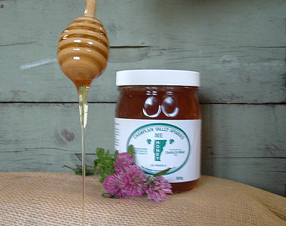
Champlain Valley Apiaries, Middlebury, Vermont has been producing high quality honey since 1931. Their honey is extracted from blossoms of clover and alfalfa and comes in crystallized and liquid form. Their crystallized honey retains all its vitamins, and nutrients because it is neither heated nor filtered. And the flavor is wonderfully light and delicate making it a perfect ingredient to use in cooking or to simple spread on a piece of whole grain toast. And I like the liquid in my cocoa.

For an extra health boost try Charles’ Royal Blend, a combination of crystallized honey, 10 grams Bee Pollen, and 10 grams of Royal Jelly.

Available online at www.champlainvalleyhoney.com

Deliciously Pure Handmade Jams & Preserves

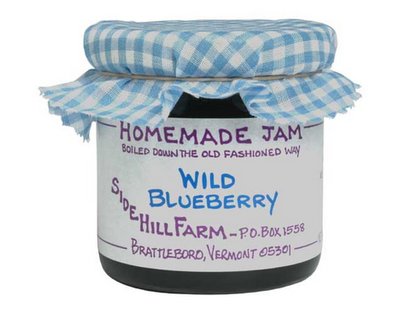
Side Hill Farm, Brattleboro, Vermont produces all their jams & preserves with small batches of fruit, sugar and nothing else. There are no preservatives, pectin or other thickeners. There’s just enough sweetness so as not to camouflage the fresh taste of the fruit. It comes through strong and pure whether you put some into your yogurt or just eat it plain for a quick healthy treat. There are many wonderful flavors to tickle your palate. Wild Blueberry, Blackberry, Apricot Orange Marmalade, and Strawberry are available online at www.vermontmapleoutlet.com/specialtyfoods.htm.

For more exotic flavors like Mango Habanero, Hot Red Pepper or Cinnamon Pear call 1-802-254-2018.

Morse Farm Maple Sugarworks

200 Year Old Maple Syrup? Not exactly. But Morse Farms, Montpelier, Vermont has been making its Maple Syrup for 200 years. They are part of the reason why Vermont Maple Syrup is the standard by which all syrups are judged. “We think you can taste eight generations of experience in our products.” Their 100% pure Maple syrup is rich in calcium, potassium, B vitamins and niacin. It comes in 4 different grades of syrup from light to full body taste: Vermont Fancy Grade, Grade A Medium Amber, Grade A Dark Amber, and Grade B. I dribble it on my cereal in the morning and use it in my baking.
Available online at www.morsefarm.com

Send YOUR favorites to askmirabai@movingfree.com


Share this:
Share this page via Email Share this page via Stumble Upon Share this page via Digg this Share this page via Facebook Share this page via Twitter
Share

Managing our Weight: Through Thick and Thin

Summer into Fall is when many of us have trouble managing our weight.

The key elements of maintaining a proper weight are learning to control portion size, eating a balanced diet, getting in touch with your hunger and exercising on a regular basis. Though exercise has always helped to burn calories, lose body fat and keep muscle tone, exercise alone will not keep your weight in check. Eating only when you are truly hungry can help you stay on track. Many of us engage in emotional eating: we eat when bored, depressed angry or even happy. To curb this tendency we must reckon with our inner selves. This can be getting on a scale, putting on a pair of pants that used to fit, and writing down what we are putting into our mouths.

For me, maintaining my proper weight is a constant struggle but it is one I embrace and so can you. Remember, the real reason for food is to keep us alive and well.

Choosing healthful foods is integral to feeling good and possibly preventing diabetes, cancer and heart disease and numerous other health problems. Between fast food and vending machines, it’s often a challenge to eat basic foods that are not prepared or processed with too much salt, sugar and preservatives. Yet a wealth of fresh vegetables, fruits, dried beans, whole grains and nuts are available if you just know what to look for and make time to prepare nutritious meals.

As we age, our immune systems become more vulnerable – especially if we are recovering from illness. The food and agriculture industries are allowed by the FDA to use a multitude of pesticides, antibiotics, hormones and even insect-based dyes to produce as much food as cheaply, and therefore profitably, as possible.

The movement toward organic foods and support for local farming in the U.S. has grown as more people become aware and concerned about the untested and unlabeled additives in our food supply. Although organic foods are often more expensive, the cost can be balanced by avoiding non-nutritious prepared foods – such as snack items, candy, sugary sodas and frozen meals – while choosing fresh produce, dried beans, whole grains and a limited amount of low fat dairy and lean meat and poultry.

Here is an important meal tip; eat a healthy breakfast. Why? Because it will give you energy to last through the morning so that you are not ravenous and prone to overeating at lunch. For the longest-lasting energy, balance three types of food in your breakfast: A serving of whole grains (a piece of whole wheat toast, a half-cup of oatmeal or a serving of whole-grain cereal per size listed on the package); two servings of fruits (which can include a glass of 100 percent juice) and a bit of low fat protein – such as yogurt, an egg, reduced-fat cheese, or skim milk on whole grain cereal. In calories and nutrition, it will beat a sugary, fatty pastry any day. Studies show that women who eat a healthy breakfast each day have an easier time maintaining a healthy weight.

Informative food-related web sites are:

Center for Science in the Public Interest (www.cspinet.org)
American Institute for Cancer Research (www.aicr.org)
USDA Food and Drug Administration (www.nutrition.gov)
Organic Consumers Association (www.organicconsumers.org)

Share this:
Share this page via Email Share this page via Stumble Upon Share this page via Digg this Share this page via Facebook Share this page via Twitter
Share

Vitamin D: The Sports Vitamin?

Vitamin D is an important Vitamin.

It’s the sunshine vitamin you absorb through your skin when you’re outdoors.

  • It helps stabilize our mood. That’s why people in northern climates with less sunlight get SAD, Seasonal Depressive Syndrome, those winter blues.
  • It works with other chemicals in your body to help keep your immune system healthy.
  • Vitamin D helps your body absorb calcium, and important element in building and maintaining bone mass.
  • And preliminary scientific evidence points to Vitamin D as a sports performance aid.

A 2009 study with adolescent girls at the University of Manchester, England found that the girls with higher levels of vitamin D had better muscle performance and speed than those with lower Vitamin D levels. It’s also thought that exercise may increase your body’s ability to absorb Vitamin D.

Anecdotal evidence shows sports performance appears to improve in the summer when people are exercising in the sun and Vitamin D levels would be highest.

There are 2 types of Vitamin D:

Vitamin D2 –the kind that’s found in fortified food and supplements and Vitamin D3 the kind you absorb from sunlight.

Conventional wisdom was that Vitamin D3 was more effective, particularly when it came to your bones, than D2. But recent research at Boston University School of Medicine showed that effectiveness is about the same for both types

Because of our lifestyles, most people don’t get enough Vitamin D from sunlight.

Even those who are outdoors a lot use sunscreen to prevent skin cancer and therefore don’t absorb enough Vitamin D.

So, most of us need to eat Vitamin D rich foods like Eggs (particularly yolks), Liver, Mackerel, Tuna and Salmon or fortified foods, like milk, or orange juice, and Cereal, or take Vitamin D supplements to get the daily recommended adult dose of 400 – 800 international units (IU) per day.

Adults over 50 should get 800 – 1000 IU daily.

These are just general recommendations. Actual requirements vary from person to person. Check with your doctor.

Send your Moving Free® with Mirabai questions to: askmirabai@movingfree.com

Share this:
Share this page via Email Share this page via Stumble Upon Share this page via Digg this Share this page via Facebook Share this page via Twitter
Share

Fabulous Forever Flexibility

Flexibility is range of motion around your joints. There are two types of flexibility. Static flexibility – how far you can stretch and hold a body part and dynamic flexibility – how much range of motion you have when you move. Both are important and you need a flexibility program that incorporates slow dynamic movements like Tai Chi, as well as static stretches like Yoga or Stretching routines.

Muscle fibers can become misaligned during normal movement. Our muscles produce chemical waste products when they work. These chemicals need to be eliminated so they don’t build up and cause aches and soreness.

Muscle fibers can become misaligned during normal movement. Our muscles produce chemical waste products when they work. These chemicals need to be eliminated so they don’t build up and cause aches and soreness.

Also, as we age, are connective tissues; tendons and ligaments tend to shorten and become stiffer. That’s why we become shorter and less flexible as we grow older. These connective tissues require as much maintenance as our muscles do. Stretching helps maintain them.

Muscles can’t stretch themselves; they only know how to contract and relax.

In a perfect world that would be enough but the fact is relaxed muscles never completely relax because there are neurological receptors in our muscles and connective tissues that keep them poised for action like a racecar at the starting line.

This is a good thing because it keeps us upright while standing and our heads from falling into our plates when we eat our dinner.

Muscles are bundles of protein fibers sort of like bunches of elastic celery. They are attached to bones on both ends by a network of tough connective tissues called tendons. Tendons are neither bone nor muscle. Although tendons are somewhat elastic, they can only be stretched about 4%. Muscles on the other hand are capable of stretching over 50% of their normal length.

When we stretch a muscle and deliberately hold it for a few seconds, proprioceptors in the tendons, called gogi tendon organs, tell the muscle to relax, not contract and we are able to hold the stretch and even stretch out a little further.

So start your stretching with a little Tai Chi –like movement to lubricate your joints and raise your core body temperature then do static stretches. Hold the stretch for a few seconds to allow those gogi tendon organs to kick in and then try to stretch and hold a bit further.

There’s more to stretching than just flexibility. Stretching is a form of meditation that creates a sense of well-being and promotes peace of mind. One finishes a routine with a more positive outlook as well as the feeling that your body is more alive, more accessible to you.

Stretching can slow down your aging clock and help you stay fabulous forever.

Send your Moving Free® with Mirabai questions to: askmirabai@movingfree.com

Share this:
Share this page via Email Share this page via Stumble Upon Share this page via Digg this Share this page via Facebook Share this page via Twitter
Share

Managing Our Weight: Through Thick and Through Thin


Winter into Spring is when many of us have trouble managing our weight.

The key elements of maintaining a proper weight are learning to control portion size, eating a balanced diet, getting in touch with your hunger and exercising on a regular basis. Though exercise has always helped to burn calories, lose body fat and keep muscle tone, exercise alone will not keep your weight in check. Eating only when you are truly hungry can help you stay on track. Many of us engage in emotional eating: we eat when bored, depressed angry or even happy. To curb this tendency we must reckon with our inner selves. This can be getting on a scale, putting on a pair of pants that used to fit, and writing down what we are putting into our mouths.

For me, maintaining my proper weight is a constant struggle but it is one I embrace and so can you. Remember, the real reason for food is to keep us alive and well.

Choosing healthful foods is integral to feeling good and possibly preventing diabetes, cancer and heart disease and numerous other health problems. Between fast food and vending machines, it’s often a challenge to eat basic foods that are not prepared or processed with too much salt, sugar and preservatives. Yet a wealth of fresh vegetables, fruits, dried beans, whole grains and nuts are available if you just know what to look for and make time to prepare nutritious meals.

As we age, our immune systems become more vulnerable – especially if we are recovering from illness. The food and agriculture industries are allowed by the FDA to use a multitude of pesticides, antibiotics, hormones and even insect-based dyes to produce as much food as cheaply, and therefore profitably, as possible.

The movement toward organic foods and support for local farming in the U.S. has grown as more people become aware and concerned about the untested and unlabeled additives in our food supply. Although organic foods are often more expensive, the cost can be balanced by avoiding non-nutritious prepared foods – such as snack items, candy, sugary sodas and frozen meals – while choosing fresh produce, dried beans, whole grains and a limited amount of low fat dairy and lean meat and poultry.

Here is an important meal tip; eat a healthy breakfast. Why? Because it will give you energy to last through the morning so that you are not ravenous and prone to overeating at lunch. For the longest-lasting energy, balance three types of food in your breakfast: A serving of whole grains (a piece of whole wheat toast, a half-cup of oatmeal or a serving of whole-grain cereal per size listed on the package); two servings of fruits (which can include a glass of 100 percent juice) and a bit of low fat protein – such as yogurt, an egg, reduced-fat cheese, or skim milk on whole grain cereal. In calories and nutrition, it will beat a sugary, fatty pastry any day. Studies show that women who eat a healthy breakfast each day have an easier time maintaining a healthy weight.

Informative food-related web sites are:

Center for Science in the Public Interest (www.cspinet.org)
American Institute for Cancer Research (www.aicr.org)
USDA Food and Drug Administration (www.nutrition.gov)
Organic Consumers Association (www.organicconsumers.org)


Share this:
Share this page via Email Share this page via Stumble Upon Share this page via Digg this Share this page via Facebook Share this page via Twitter
Share